Travel Route Planner: How to Build an Efficient Trip Route
Cut wasted travel time by planning your route around proximity and direction — group places by area and build a route you can follow.
The biggest time sink in travel isn't finding the places — it's moving between them inefficiently. A packed itinerary where you spend 40% of your day in transit is a planning failure, not a destination problem. Good route planning changes that equation significantly.
The Core Principle: One Area Per Day
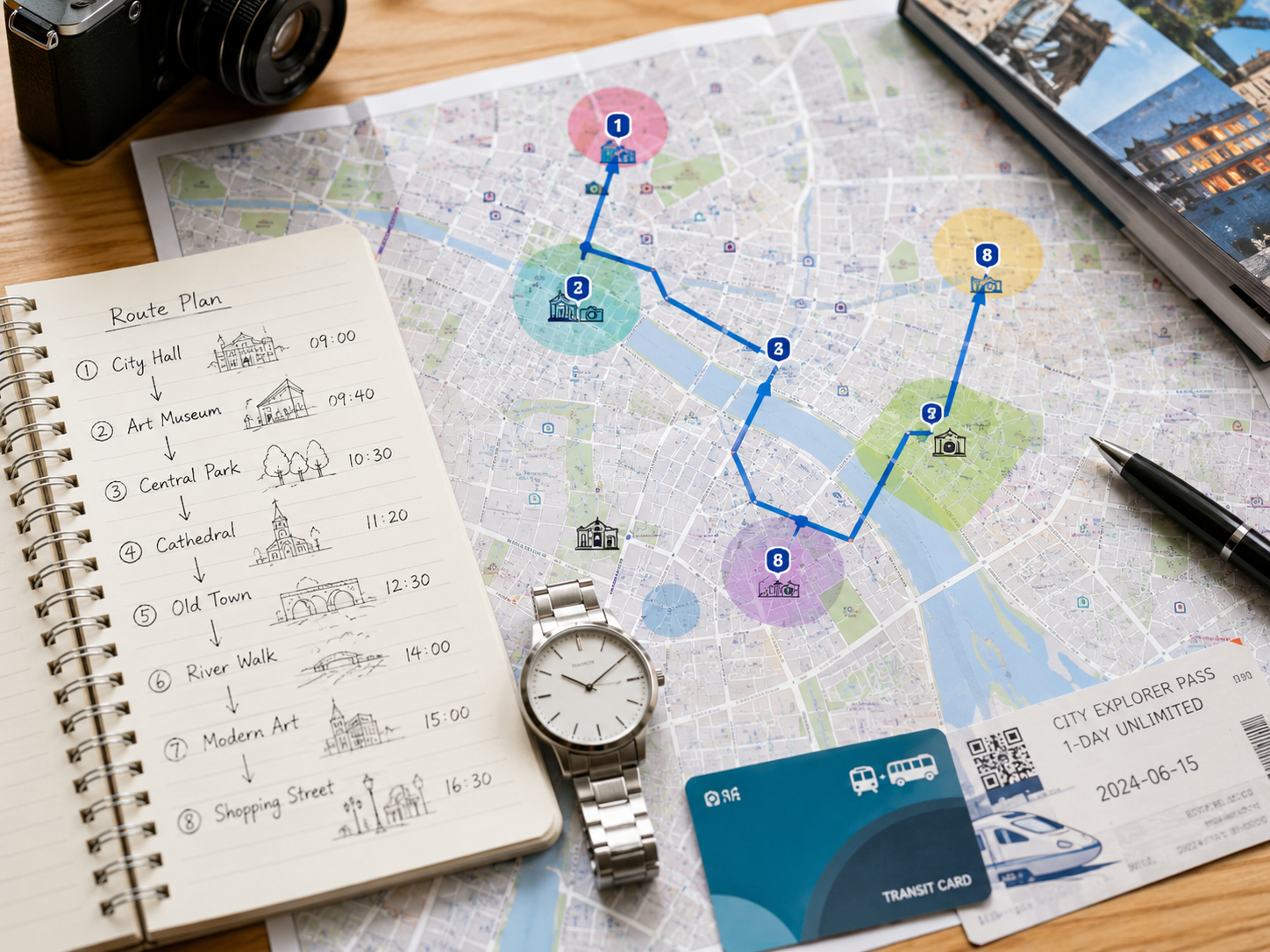
The foundation of efficient route planning is simple: pick one area and stay in it for the day. Moving from Zone A in the morning to Zone B in the afternoon to Zone C in the evening generates three separate transit costs. Staying in one area all day keeps those to a minimum.
Plan in the Direction of Travel
Even within a single neighborhood, direction matters. Starting at the northern end of an area in the morning and ending up back at the northern end in the evening — having spent the afternoon at the southern end — is a round trip you didn't need to make. Structure your day so you move in one continuous direction from start to finish.
Route Optimization Checkpoints
Turn your saved places into a day-by-day itinerary
Organize places by day in Travplan and manage your route and trip preparation in one place.
Route Planning by Transport Type
| Transport | Characteristics | Route Strategy |
|---|---|---|
| Walking | Flexible, but fatigue accumulates | Group walkable spots; limit daily stop count |
| Subway | Fast but transfers take time | Cluster spots on the same line |
| Bus | Direct but schedule-dependent | Check times in advance; leave buffer |
| Day trip (train) | 1–2 hr travel each way | Dedicate the whole day; skip city stops |
| Rental car | Maximum flexibility, parking needed | Route around car-friendly attractions |
Time-of-Day Allocation
Popular sights have shorter queues in the morning. For lunch, offset your meal by 30 minutes (11:30 or 13:30 rather than 12:00 or 13:00) to avoid peak restaurant queues. Evening spots — night views, markets, neighborhoods that come alive after dark — should go last in the day, timed to when they're actually at their best.
A good route makes the next stop feel obvious. You move through the day rather than navigating it.
Maps Make Route Problems Visible
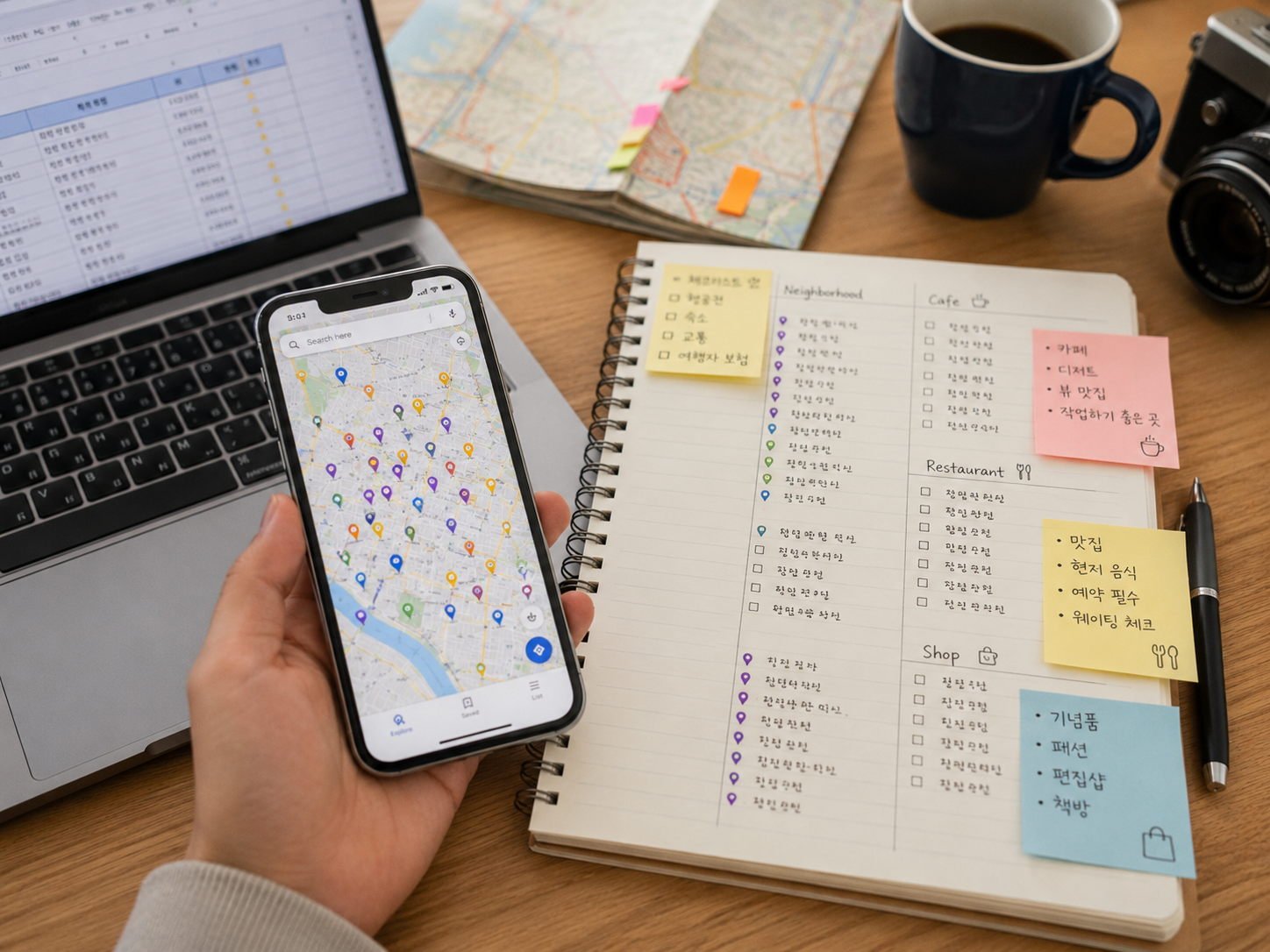
Text-format itineraries hide route problems. A list of places looks logical in order until you put them on a map and realize two adjacent spots on your list are on opposite sides of the city. Viewing your saves spatially — day by day with different colors — makes bad routing immediately obvious. Travplan displays your saved places by day on a map, so you can spot and fix conflicts before you travel.