How to Plan a Trip: A Step-by-Step Guide
Plan a trip from scratch, step by step — choose dates, book flights, and build a day-by-day route you can actually follow.
Deciding to take a trip is the easy part. Actually building the plan — from choosing dates to having a workable day-by-day schedule in hand — involves a sequence of decisions that most people find harder than expected. This guide covers that process in order.
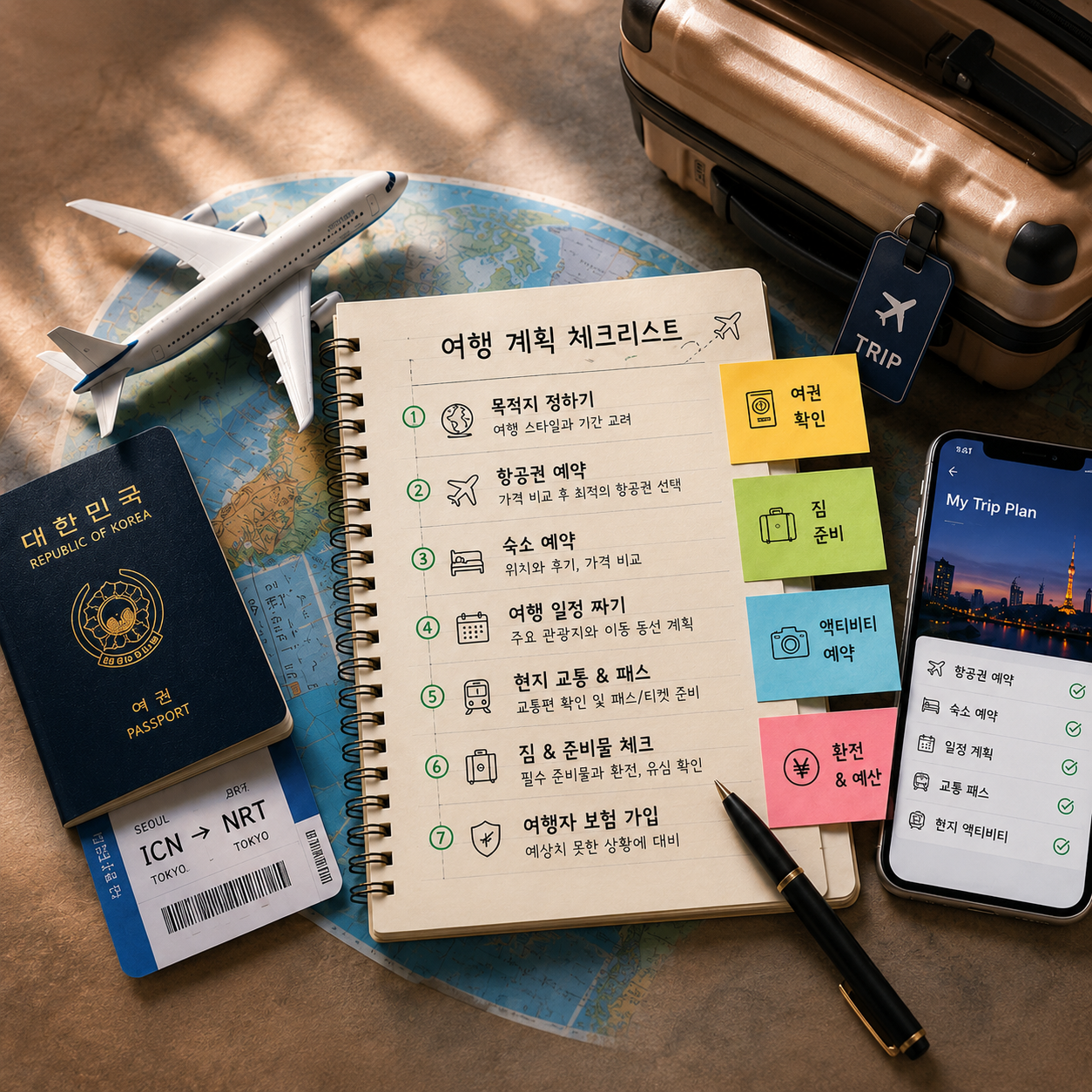
The 5-Step Trip Planning Process
| Step | Task | Target Time |
|---|---|---|
| Step 1 | Fix dates and destination | 1–2 hours |
| Step 2 | Book flights and accommodation | 2–4 hours |
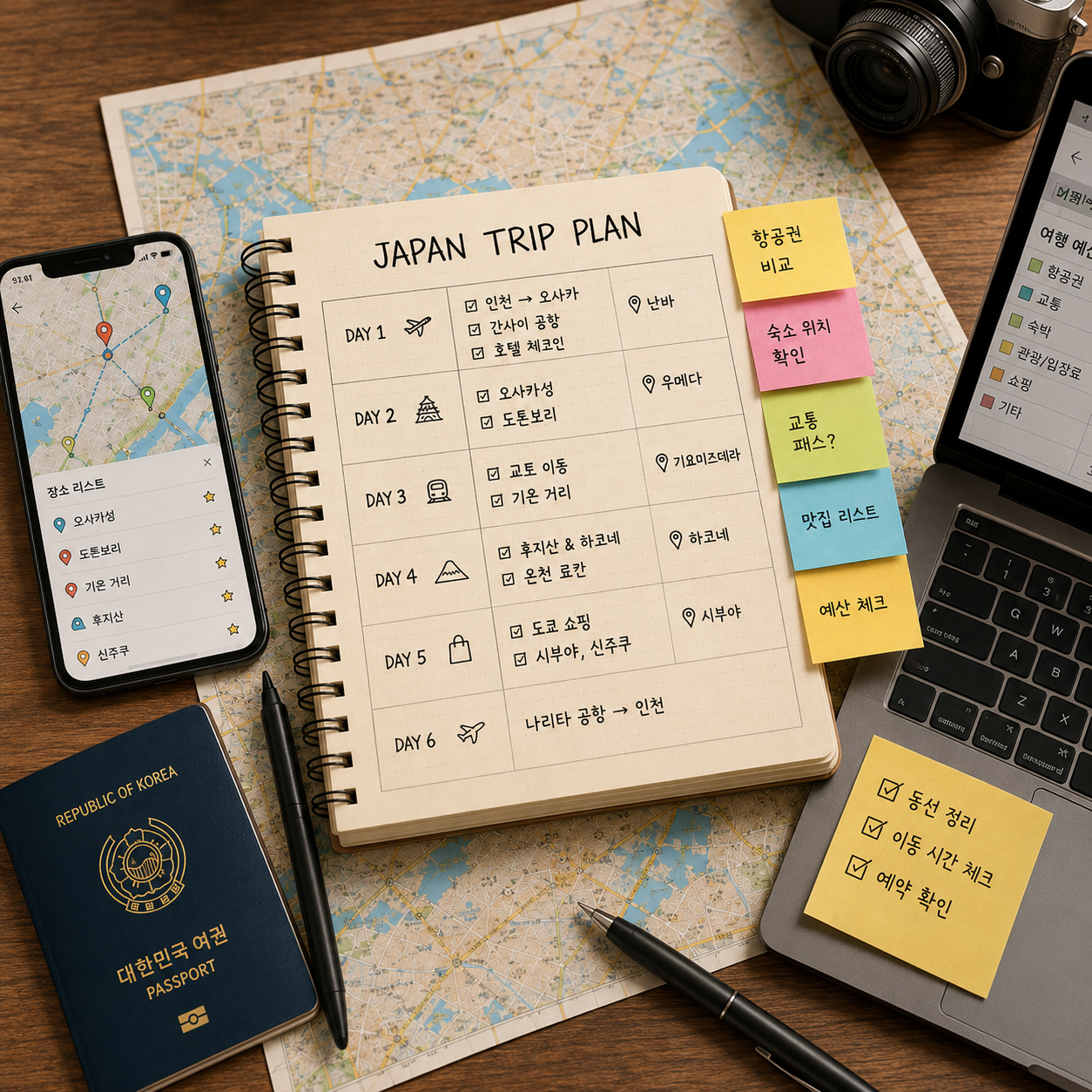
| Step 3 | Collect places you want to visit | 2–5 hours |
| Step 4 | Build your day-by-day route | 2–4 hours |
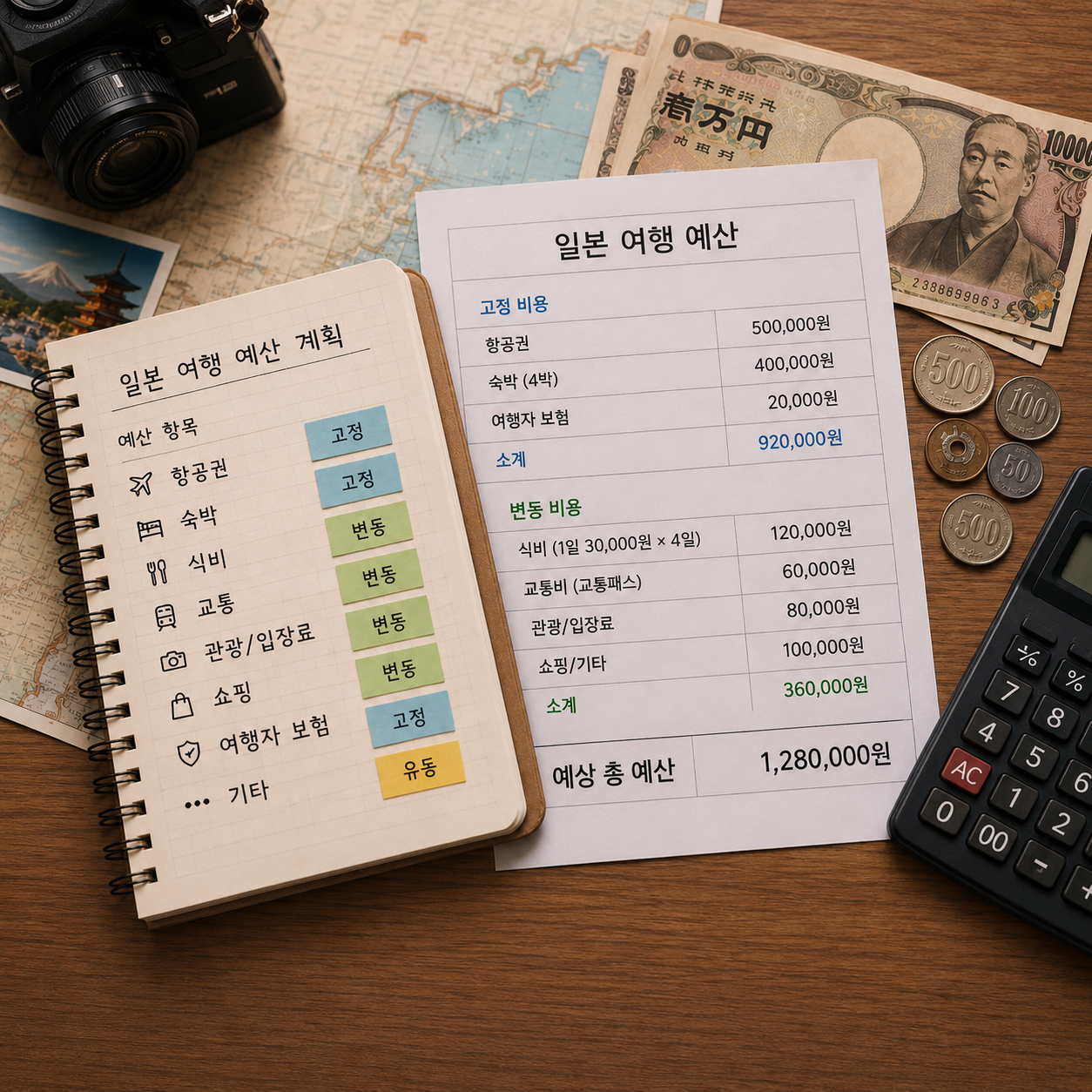
| Step 5 | Budget and packing list | 1–2 hours |
Step 1: Fix Dates and Destination
Start with dates, not destination. Your vacation window or available holiday days sets the frame. Once you have a date range, search flights across multiple destinations and let prices and availability guide your final choice. This approach gives you flexibility that destination-first planning doesn't.
Step 2: Book Flights and Accommodation
Book your flight first, then accommodation immediately after. For popular routes or peak season, 2 to 3 months lead time is typical. Your hotel or apartment location matters more than most people realize — it determines your daily starting point, which shapes your entire route structure.
Turn your saved places into a day-by-day itinerary
Organize places by day in Travplan and manage your route and trip preparation in one place.
Flight and Accommodation Booking Checklist
Step 3: Collect Places You Want to Visit
With flights and hotel locked in, start collecting places. Google Maps saves, Instagram bookmarks, blog scrapes — use whatever system works for you. At this stage, don't filter aggressively. Collect more than you'll realistically visit. You need options to make scheduling decisions later.
Step 4: Build Your Day-by-Day Route
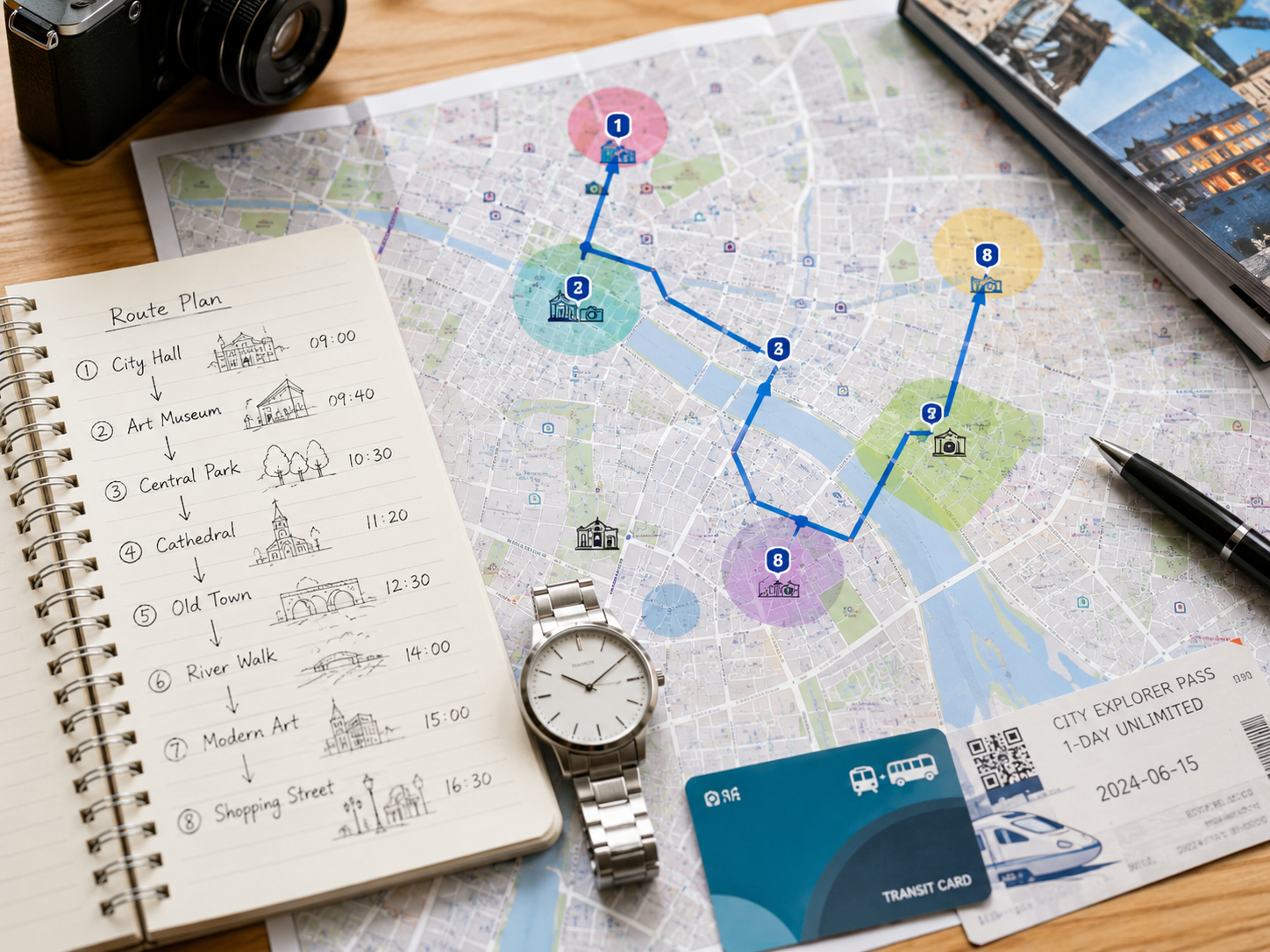
Now assign your saved places to days, grouping by neighborhood and travel direction. Check distances — a spot you saved enthusiastically might be 45 minutes from your base. Keep day trips to separate days with no city sightseeing on the same day. Organize each day so you're moving in one direction rather than crisscrossing.
Route efficiency tip: assign your farthest or most crowded spot to the morning of each day. Move toward your hotel as the day progresses. Dinner is easy to choose when it falls naturally near where you're ending up.
A good itinerary isn't measured by how many places it fits in — it's measured by how little time you spend navigating and how much you spend experiencing.
Step 5: Budget and Packing List
Budget calculation only becomes accurate once your itinerary is complete. You need to know which restaurants you're targeting, which entry fees you'll pay, and how many transit days you have. The same is true for your packing list — what you pack depends on the activities and weather at your destinations. Travplan connects your itinerary to budget and weather data, so this final step comes together faster.