Why Travel Planning Feels So Complicated
Choosing a destination takes minutes; building the itinerary takes hours. Here's why travel planning feels so complicated and where it breaks down.
Agreeing on a destination is the easy part. The hard part is everything that comes after — finding places, collecting them somewhere, figuring out which ones are actually near each other, and assembling all of it into a day-by-day plan that holds up. Most people underestimate how long this takes until they're three hours deep and still don't have a real itinerary.
Picking Where to Go Is Surprisingly Fast
One message in the group chat — 'What about Tokyo?' — and within minutes everyone's on board. Dates get sorted, someone finds a hotel link, and it feels like planning is already underway. That momentum is real, but it's also deceptive. You've agreed on a destination and a rough timeframe. You haven't actually planned anything yet.
Then the Research Phase Hits
You open a browser to look up things to do, and twenty minutes later you have fifteen tabs open. Travel blogs, YouTube vlogs, Reddit threads, Instagram reels, TripAdvisor pages. Every source mentions something different. Promising spots get saved as screenshots, addresses get pasted into notes apps, links get dropped into the group chat.
A few days later, you revisit everything you saved and run into the same problem: 'Wait, where was this again?' The screenshot doesn't include a location. The note has an address but no map context. The link someone shared in the chat has scrolled off. You spend time re-finding things you already found.
Continue planning your trip in Travplan
Keep saved places, itineraries, budgets, weather, and trip preparation organized in one place.
Organizing Saved Places Is Its Own Project
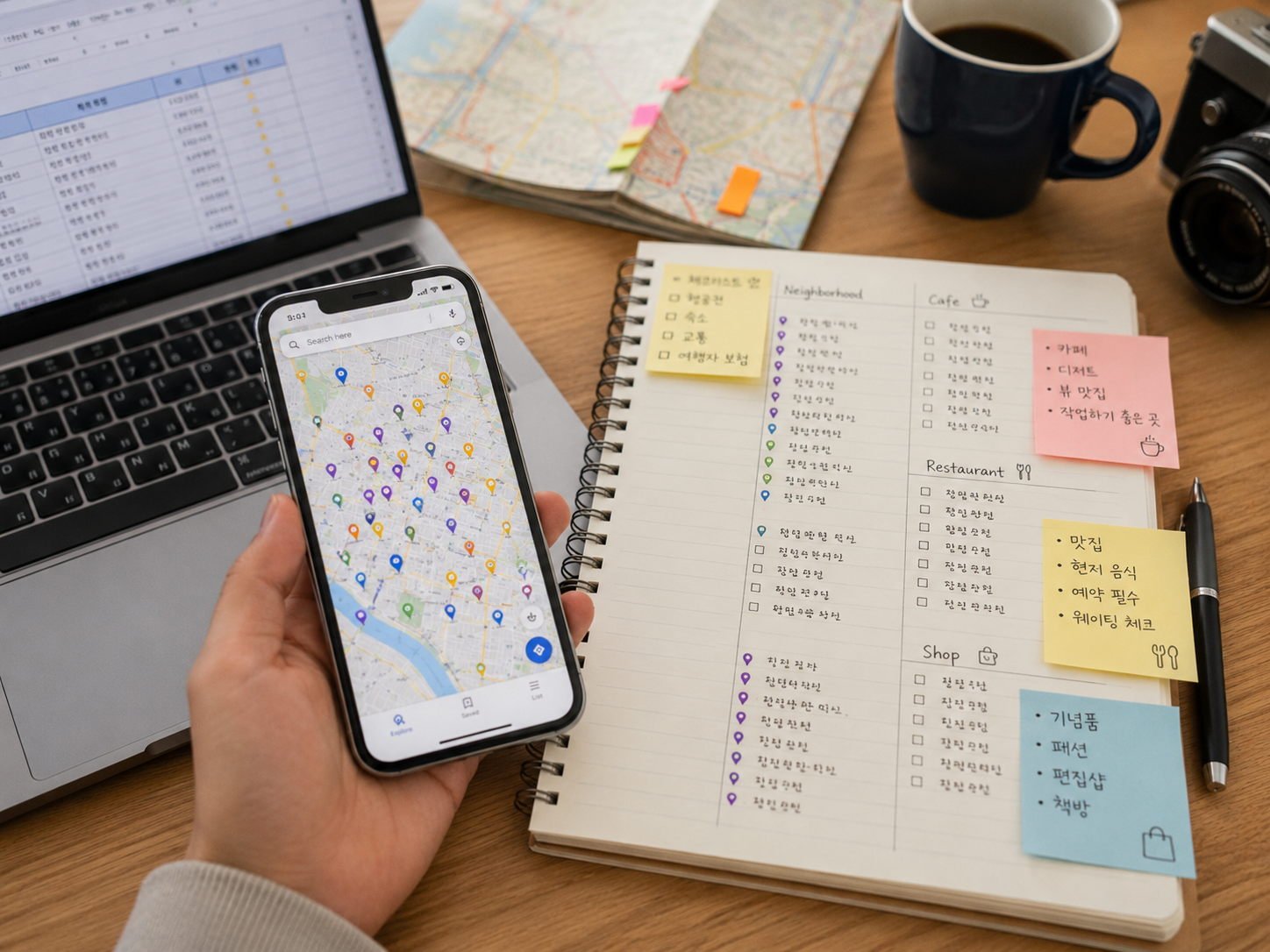
After a week of collecting, you might have thirty places spread across Google Maps stars, iPhone Notes, a shared doc, and your camera roll. Each system has a slightly different format. None of them talk to each other. Combining them into a single working list means doing it manually.
Familiar pain points from the research phase
Route Planning Is Where Most Time Gets Lost
Once you have a list of thirty places and four days to fill, the real work starts. You need to figure out which places are close enough to pair together, which require a full day on their own, and how to sequence everything so you're not constantly backtracking. What looks manageable as a list becomes a spatial puzzle when you put it on a map.
Thirty places, four days. Assign them by area — but everyone's favorite spots are spread out across the city. Start over.
Group trips add another layer. Once you've clustered places by neighborhood and built a draft schedule, someone has a preference conflict. A spot they really want is in the wrong part of the city for the day it landed on. Moving it means reshuffling other days. This cycle can repeat several times before the itinerary stabilizes.
One Change Can Reset Everything
A finalized itinerary has a short shelf life. Someone has to adjust their flight. A restaurant you planned around requires reservations you missed. A museum is closed on the day you scheduled it. Each of these sends you back to the map to recheck routing and availability, often cascading into changes across multiple days.
The difficulty isn't a lack of information — there's more travel content available than anyone could read. The difficulty is the conversion step: taking a loose collection of saved places and turning it into a structured, day-by-day plan with sensible routing. That step is where planning either comes together or stalls out.
RelatedHow to build a travel itinerary from scratchCollecting places to visit is the part everyone does easily. Building those places into a workable itinerary — with realistic routing, time estimates, and room to adapt — is the part that takes most of the time. That's the gap Travplan is designed to close.