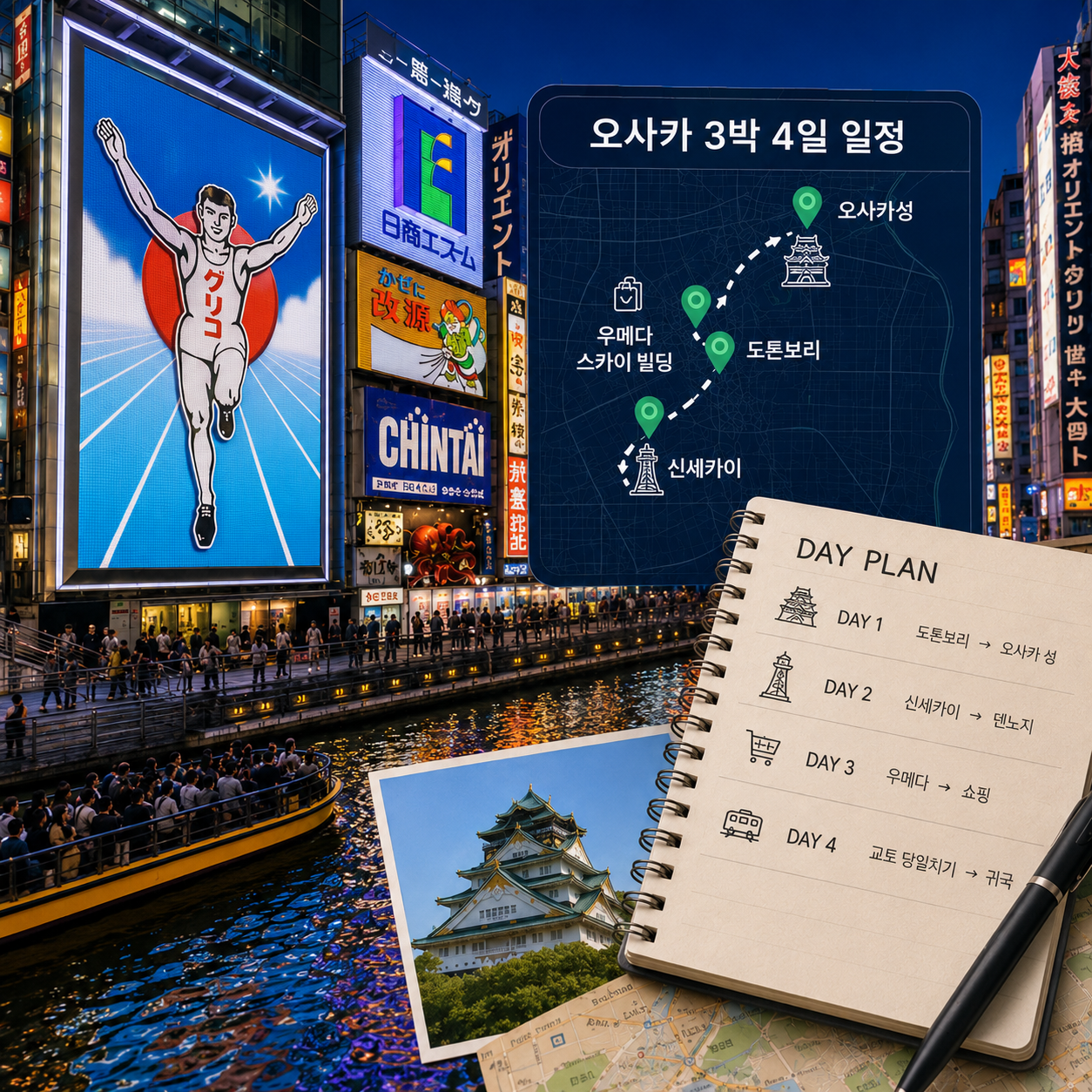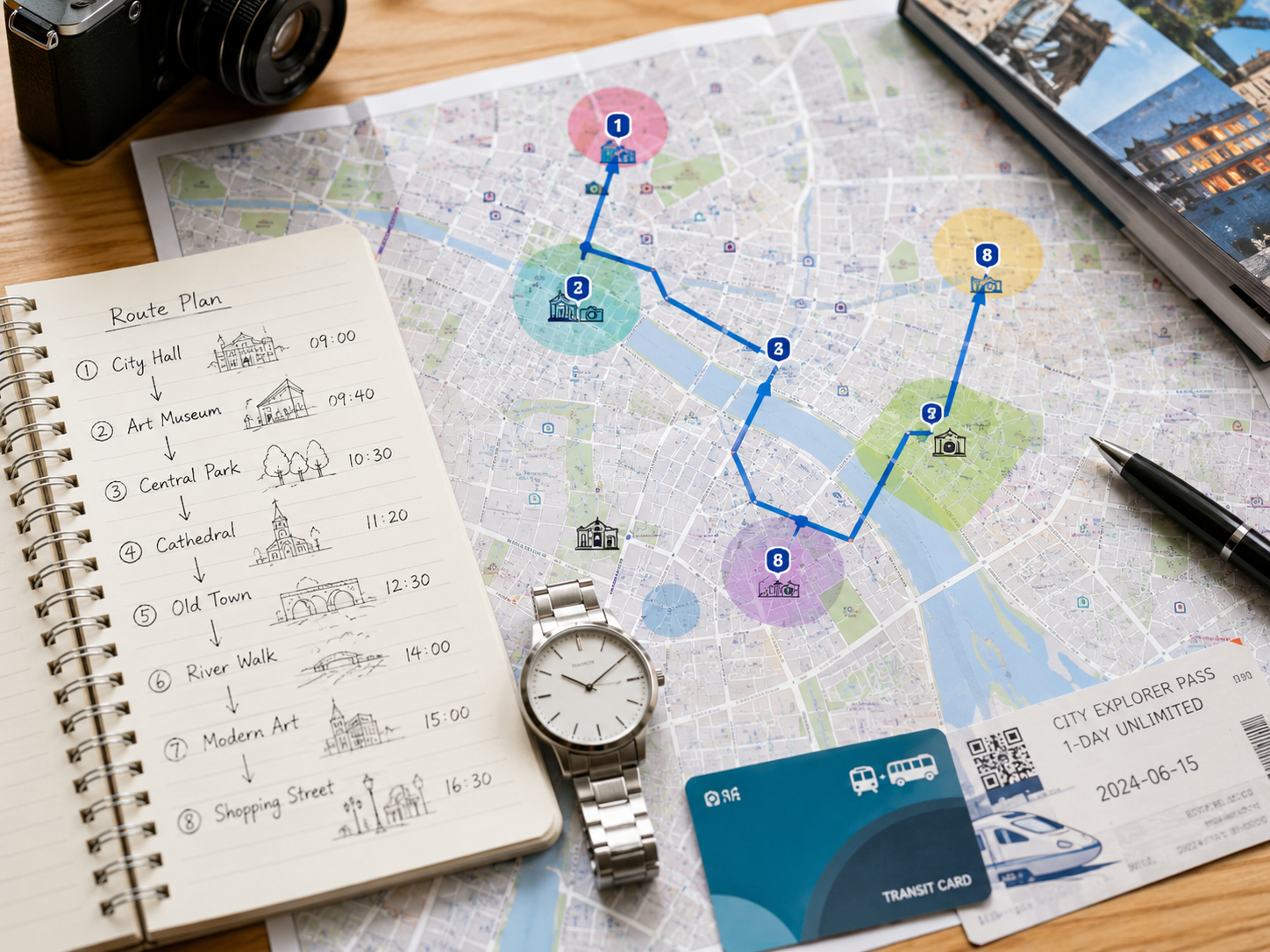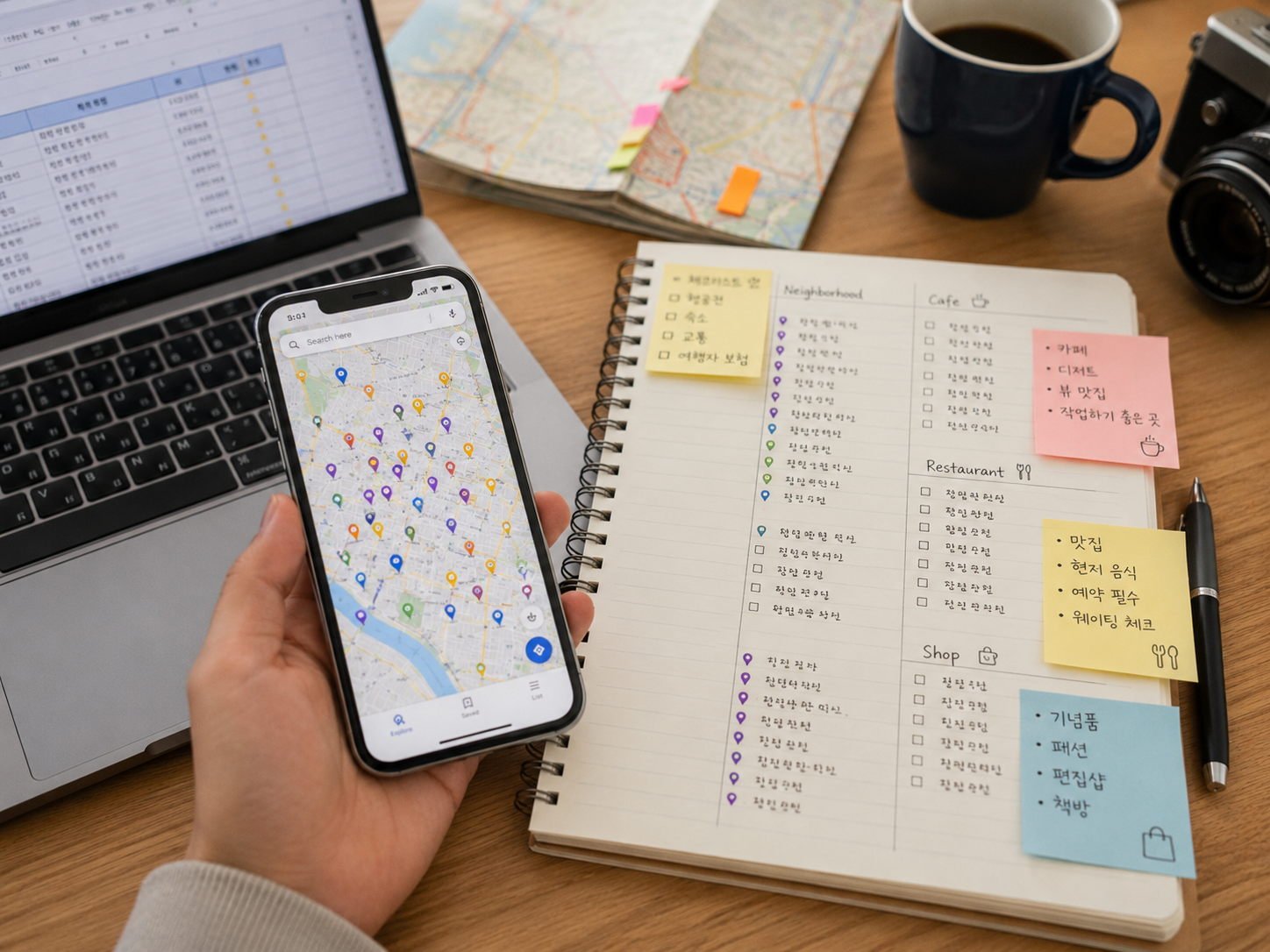
How to Plan a 4-Day Osaka Itinerary
Osaka has a lot going on and it's easy to spend more time in transit than sightseeing. Here's how to build a 4-day itinerary by area so your days actually flow.
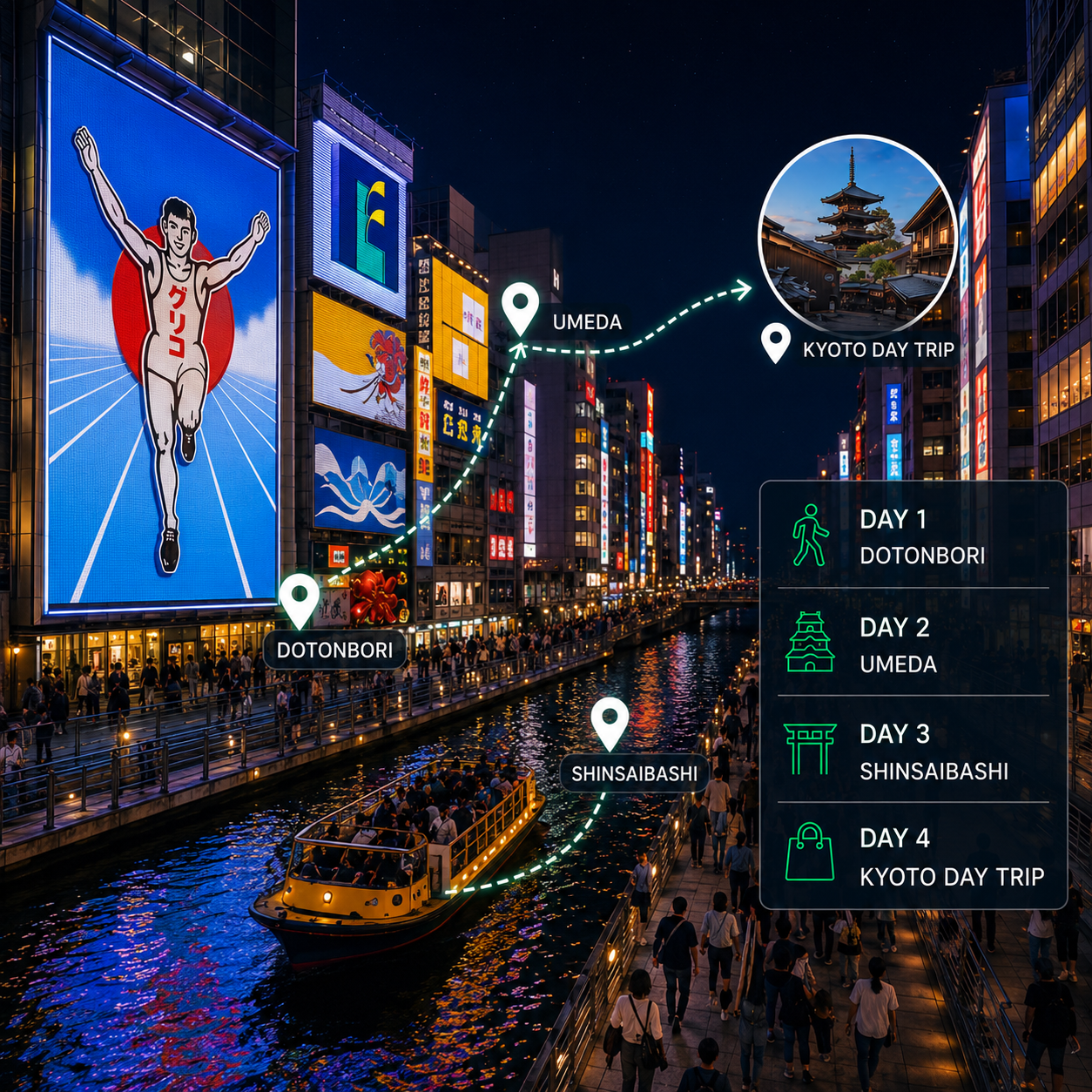
You've saved forty places in Osaka — restaurants, cafes, photo spots, shopping streets, sights. Now you have four days to fill. The challenge isn't finding things to do; it's arranging them in an order that makes geographic sense. Put them in the wrong sequence and you'll spend half the day on the subway.
The reason Osaka itinerary planning feels complicated is that the saved places are scattered across several distinct neighborhoods. If you schedule them in the order you discovered them, you'll crisscross the city repeatedly. The fix is to plan by area, not by interest.
Stop Copying Someone Else's Itinerary
Blog itineraries are organized around the writer's preferences, accommodation location, and travel style. The moment your saved spots differ from theirs — which they always do — the schedule stops working. You need to build your own version, and the most efficient way to do that is to group your saved places by the Osaka neighborhood they're in.
Osaka's Main Areas and What's in Each
Osaka by neighborhood
A 4-Day Framework to Build From
Day 1 — Arrival + Dotonbori / Namba
If you're arriving at Kansai International Airport in the afternoon, take the Nankai Rapi:t express or airport limousine bus to Namba. Check in, then spend the evening walking Dotonbori. The canal at night is the definitive Osaka first impression, and Amerikamura is a 20-minute walk from there.
Turn your saved places into a day-by-day itinerary
Organize places by day in Travplan and manage your route and trip preparation in one place.
Day 2 — Shinsaibashi + Umeda
Work through the Shinsaibashi shopping arcade in the morning — it's covered, so weather doesn't matter. After lunch, take the subway north to Umeda. Grand Front Osaka for shopping, HEP Five for the rooftop Ferris wheel, and the Sky Building observation deck for an early evening view.
Day 3 — Osaka Castle + Shinsekai
Arrive at Osaka Castle before 9am to beat the crowds — the castle keep opens at 9, and the lines build quickly after 10. After the castle, take the subway to Tennoji and walk down to Shinsekai. Kushikatsu (deep-fried skewers) for lunch, Tsutenkaku Tower for the old-Osaka atmosphere.
Day 4 — Day Trip or Morning Shopping Before Departure
If your flight is late afternoon or evening, a day trip to Nara is easy — the Kintetsu line from Osaka-Namba takes about 45 minutes to Kintetsu Nara station. Todai-ji Temple and the deer park are 10 minutes from the station on foot. For an earlier departure, use the morning for any remaining shopping and head to the airport.
The Most Common Scheduling Mistake
Packing too many places into a single day is the default mistake. On a map, two neighborhoods might look close — but once you factor in walking to the station, the transit ride, finding the exit, and walking to the actual spot, thirty minutes disappears fast. With meals, photos, and rest, four to six places per day is a realistic ceiling for most people.
If two areas require more than 30 minutes of transit between them, don't put them in the same day. You'll spend more energy commuting than experiencing.
Osaka's subway system is excellent, but that doesn't mean all neighborhoods are equally convenient from each other. Check actual transit times when you're assigning spots to days — not just as-the-crow-flies distance on a map.
RelatedHow to Organize Your Google Maps Saved Places Before a TripThe key to an Osaka itinerary that actually works isn't choosing the right spots — it's grouping them by area and building each day around one neighborhood at a time. Start with the geography, and the schedule writes itself.